World bosses have been part of WoW since the earliest days, yet their design philosophy has changed dramatically over the years. What began as straightforward encounters in open zones has evolved into large-scale, cinematic set pieces that reshape entire landscapes. Modern world bosses are no longer just sources of loot—they are environmental events, social gatherings, spectacle-driven battles, and displays of Blizzard’s evolving encounter design.
This article explores how world bosses grew from simple outdoor challenges into some of the most visually striking and mechanically engaging events in Azeroth, influencing exploration, community activity, and the flow of each expansion’s open world.
The Early Days: Simplicity and Scale
Classic world bosses such as Kazzak, Azuregos, and the Green Dragons were straightforward by today’s standards. Their gimmicks were minimal, their mechanics were few, and their main challenge came from raw numbers and player competition. These bosses were dangerous and thrilling, but their design relied heavily on social conflict—groups racing each other, struggling to tag bosses first, or even sabotaging rival raids.
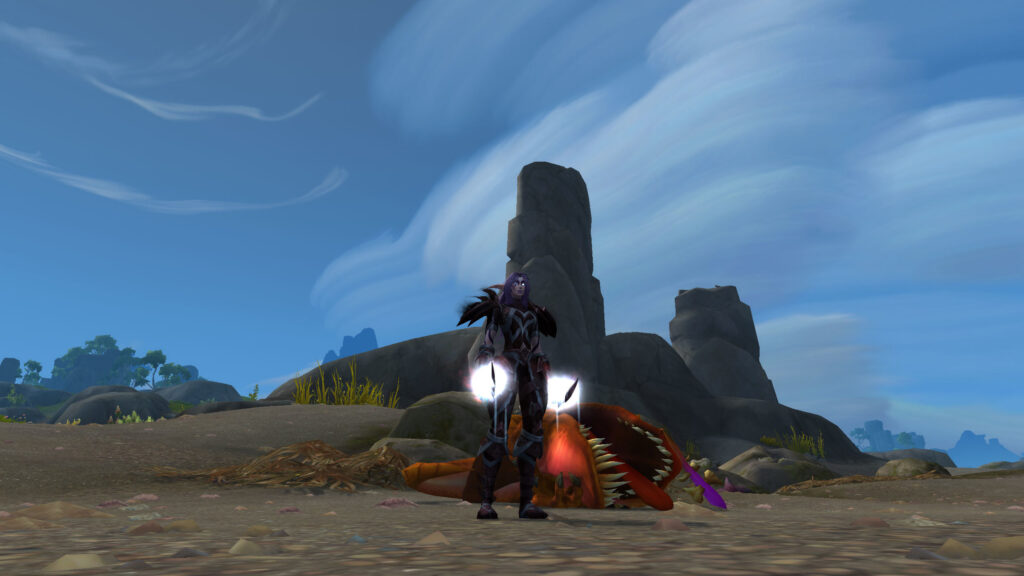
While mechanically simple, these bosses established the foundation for open world challenges. They created unforgettable moments of chaos and cooperation, even if the fights themselves lacked the spectacle players expect today.
The Rise of Shared-Tag Encounters
As expansions progressed, Blizzard shifted world bosses away from faction-based competition and toward cooperative fights. Starting in Mists of Pandaria, shared tagging allowed everyone in the area to participate and earn rewards, turning world bosses into communal open world events rather than battlegrounds of guild rivalry.
This shift significantly changed player experience. Instead of fighting over access, players began forming spontaneous groups that allowed anyone—regardless of class, spec, or gear—to join in. This accessibility helped world bosses become weekly rituals built into the routine of gearing and progression.
- Accessibility: Large groups form naturally without premade coordination.
- Inclusivity: New and returning players can participate without barriers.
- Consistency: Weekly rewards encourage long-term participation.
- Stability: Shared-tagging eliminates griefing and faction competition.
The Era of Cinematic Presentation
Modern expansions shifted world bosses toward cinematic spectacle. Legion’s towering demons, Battle for Azeroth’s colossal creatures, and Dragonflight’s elemental monstrosities all reflect a design direction focused on immersion and presentation. Bosses now alter the environment with swirling storms, erupting ground, magical distortions, or massive roars that echo through the zone.
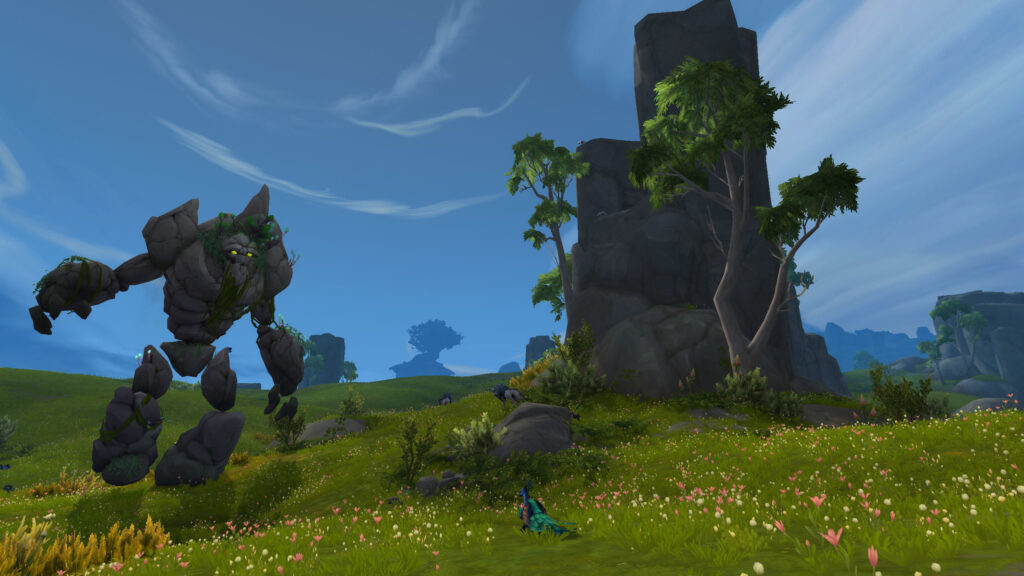
These bosses aren’t just fights—they are staged events. Their arrival is broadcast through zone-wide alerts, environmental effects, or shifting music cues that signal the beginning of a large-scale encounter. This evolution ties world bosses more closely to narrative, reinforcing their role as forces that shape the world.
Zone-Wide Interactions and Environmental Mechanics
Recent world bosses often interact dynamically with their surroundings. Whether creating hazards, summoning waves of adds, or altering the terrain, these mechanics push players to engage with the environment rather than simply stand in a circle and attack. This complexity brings world boss encounters closer to raid-level design—only in a more approachable, forgiving format.
Dynamic spawning, timed events, and environmental hazards build anticipation and encourage players to move, adapt, and collaborate organically with others in the area.
| Boss Type | Environmental Feature | Gameplay Impact |
|---|---|---|
| Elemental Giants | Storms, eruptions, shifting terrain | Requires mobility and awareness |
| Dragonflight Behemoths | Zone-wide debuffs and wind effects | Alters positioning and strategy |
| Demonic Invasions | Summoned waves and corruption fields | Encourages group coordination |
Social Hubs and Community Moments
World bosses have also become gathering points that bring together players across servers. Because these encounters often require large groups, they naturally foster social interaction. Players gather, share buffs, summon mounts, or compare transmogs while waiting for the boss to spawn.
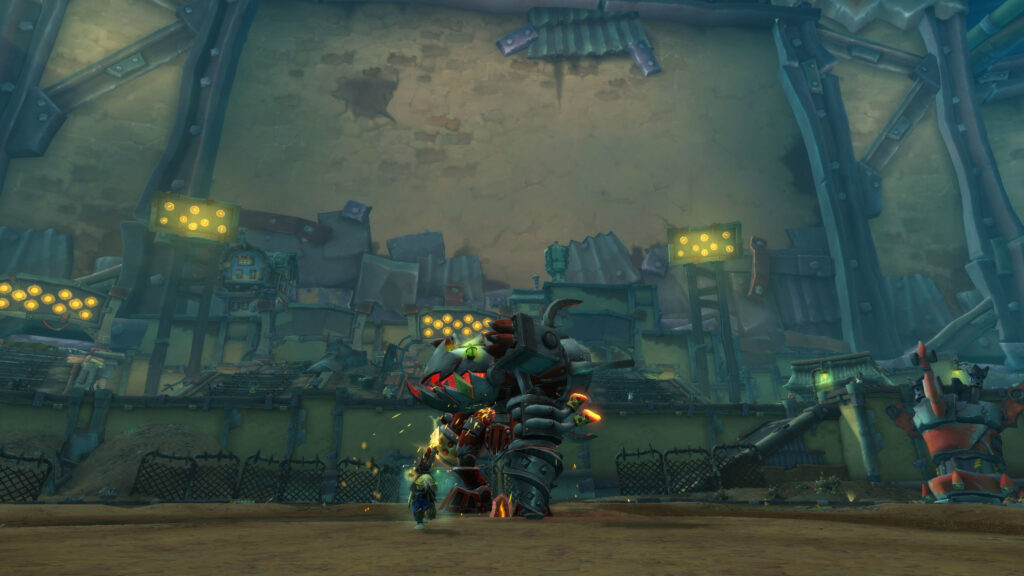
In cross-realm expansions, these gatherings feel more alive than ever. Different players from different realms converge in the same space, bringing diverse strategies, personalities, and energy to each world boss event.
Conclusion
World bosses have evolved from simple outdoor fights into cinematic, zone-shaping events that enrich Azeroth’s open world. Their modern designs deliver spectacle, immersion, and cooperative gameplay in a way that few other systems can match. Whether players are seeking weekly upgrades, enjoying community gatherings, or hunting achievements, world bosses offer memorable experiences that highlight the best of WoW’s evolving encounter design.
They remain proof that some of the greatest adventures in Azeroth don’t require a raid group—they just need a world, a threat, and a crowd ready for battle.